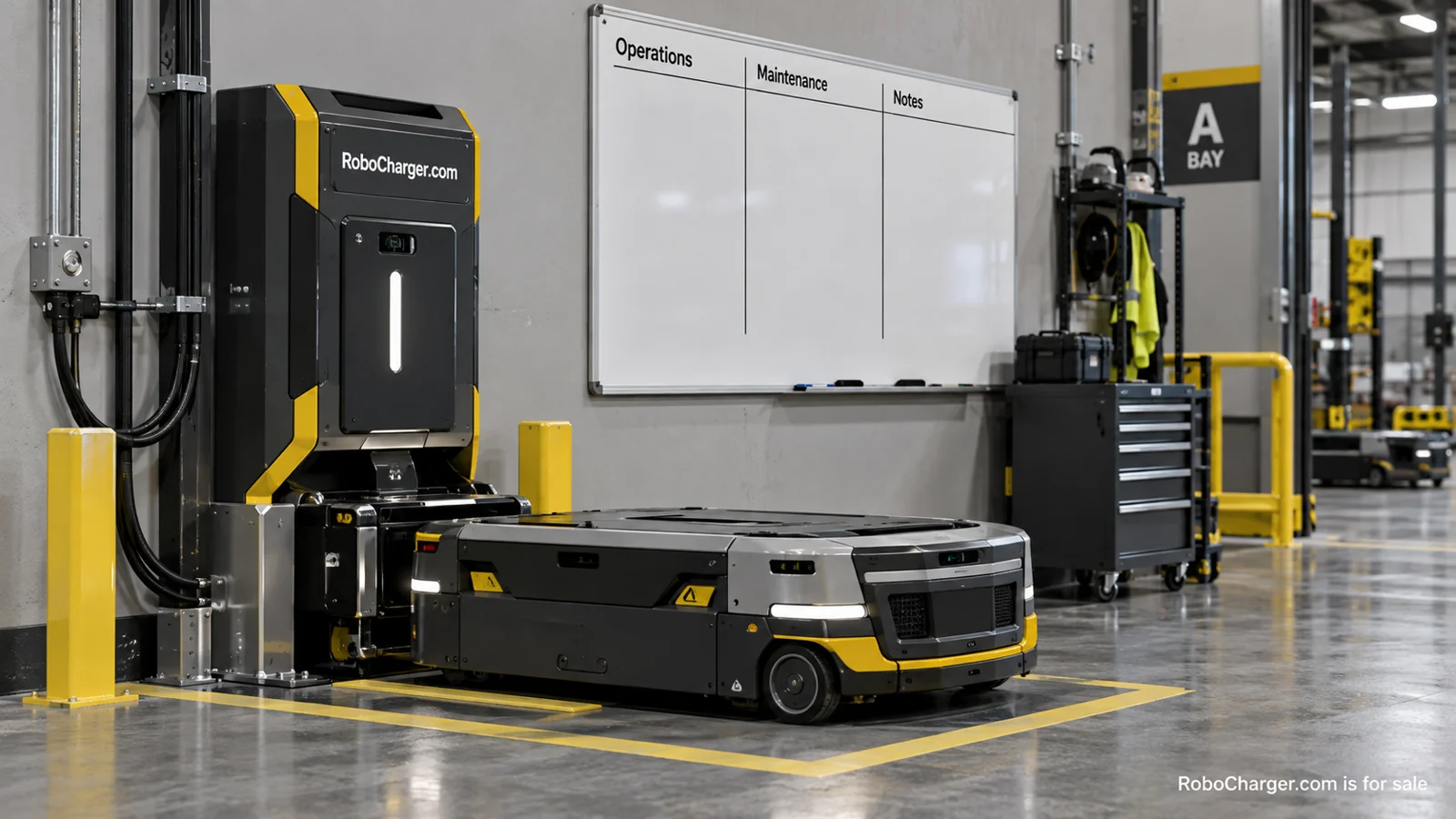
A depot charging plan has to survive the moment a vehicle returns late, a bay becomes unavailable, or the next shift inherits an unfinished task. The neat schedule is only the starting point. The operating process needs to tell people what changes, who decides, and how the next person learns about it.
Begin with one ordinary shift rather than a proposed dashboard. List the assets expected to return, their next work requirement, the charging locations they can use, and the people available to respond. A spreadsheet or whiteboard can be enough to expose the first gaps. Software becomes easier to specify once the underlying decisions are visible.
This guide offers an illustrative workflow for discussion with a depot team. It does not set electrical limits, battery procedures, or site safety rules. Those requirements come from the equipment documentation and qualified site specialists. The operational task is to make the approved routine understandable and assign its handoffs.
Define ready in terms of the next job
Ready should mean something more specific than connected to a charger. A vehicle may be connected but not prepared for its next assignment. A robot may have sufficient charge while still waiting for a maintenance release. Write down the conditions the dispatcher actually needs before assigning work.
The definition can include the next departure or task time, the required charging condition established by the operator’s approved planning process, and any outstanding restriction. Keep these items distinct. A single green status can hide the difference between a charging decision and a maintenance decision.
Ask the dispatcher to walk through a normal assignment using the proposed definition. If the record still requires a phone call to discover a basic restriction, add the missing field or handoff. The goal is a small set of useful information that supports a real decision, not a large inventory of every available data point.
Give the bay register an owner
A plan depends on knowing which assets can use which charging locations. Maintain a register of bays, supported equipment, availability, and planned maintenance. Include a person responsible for keeping it current. A register copied from an installation drawing can become stale as equipment is moved or replaced.
Separate unavailable from occupied. An occupied bay may become available at a known time. An unavailable bay may need a repair or review before it can return to use. Combining both states into busy removes information the scheduler needs.
For a mixed robot and EV depot, preserve compatibility boundaries in the register. Sharing a planning view does not mean sharing a physical charger. A dispatcher should see the available choices for the particular asset, along with the reason a seemingly empty bay cannot be assigned to it.
Set a visible priority rule
When several assets need attention, staff should know how priorities are decided. One possible approach is to start from the next required work time and escalate conflicts to the shift supervisor. The exact rule belongs to the operator, but it should be written down and understood by the people using it.
The Department of Energy’s smart charge management guidance discusses coordination using fleet and energy-related inputs. That supports looking beyond individual charging sessions when planning a site. A particular depot still needs to define its own constraints and operating responsibilities.
Make overrides visible. If a supervisor changes the order to accommodate an urgent assignment, record the reason and the resulting effect on other work. A silent override can leave the next shift following an obsolete plan. A short note with an owner is often enough to preserve the decision.
Build the exception path before adding automation
Choose a few recurring exceptions and map them end to end. A late return, an unsuccessful connection, and an unavailable bay make a useful starting set. For each, identify how the event is detected, who acknowledges it, what approved action is available, and how resolution is recorded.
Avoid assigning an exception to a department without a working handoff. Maintenance may be the right team, but somebody still needs to receive and accept the task. The record should distinguish reported, acknowledged, in progress, and resolved if those stages matter to the site’s work.
A hypothetical late-returning vehicle illustrates the point. The original bay is now needed by another asset. The dispatcher checks supported alternatives, asks the supervisor to resolve the priority conflict, and updates the next shift’s departure list. The process is useful even if the eventual connection is manual. Automation can then support a known sequence instead of concealing an undefined one.
Use a short shift handover
The outgoing shift should pass on unresolved work, changed priorities, and equipment restrictions. It should not have to narrate every completed charging session. A compact handover makes the exceptions easier to see and reduces the chance that a significant restriction is buried in routine detail.
| Handover item | Useful detail |
|---|---|
| Asset needing attention | Identifier and next required task |
| Current problem | Observable state and when it was last checked |
| Assigned owner | Person or accepted team responsibility |
| Next action | Approved step and any dependency |
| Review time | When somebody should check again |
Have the incoming shift confirm the unresolved list. This is a process choice to test locally, not a universal requirement. The important question is whether both shifts share the same understanding of who will act next. If the handover becomes long, look for repeated issues that deserve a better underlying routine.
Measure exceptions with enough context
Start with measures that help the team improve a decision. Count missed readiness requirements, unsuccessful connection attempts, or time from a reported problem to acknowledgement if those events are reliably recorded. Define each measure before comparing periods. A change in event definitions can look like an improvement even when the work has not changed.
Keep planned downtime separate from unexpected unavailability. Also distinguish a charger that is unavailable from an asset that cannot use it for another reason. The Open Charge Alliance’s uptime monitoring paper provides technical context for charger status and monitoring; the depot should still choose measures that answer its own operating questions.
Review a few incidents in detail alongside any totals. A count can tell the team where to look, but the event history explains what to change. If every incident lacks an assigned owner, the first improvement may be in the handoff rather than the charging hardware.
Practice the loss of information
Discuss what staff should do when a status feed is stale or a planning tool is unavailable. The fallback should use approved local procedures and make uncertainty visible. A last-known status should not quietly appear to be a current observation.
Identify the minimum information needed to continue the shift and where it can be obtained. That may include the current departure list, equipment restrictions, and a way to contact the responsible supervisor. The actual fallback depends on the site; documenting it gives the team something concrete to rehearse.
Start with the current exception pile
Gather a small sample of recent charging problems and sort them by the decision that stalled. Was compatibility unclear? Was no one assigned? Did the next shift lack the update? Choose one recurring cause and change the corresponding part of the workflow.
After the change, review the same type of incident again. Preserve the conditions and limits of the observation rather than claiming a general uptime improvement from a small sample. A charging plan becomes dependable through clear decisions, maintained records, and handoffs that survive an ordinary difficult shift.